

Funding is tight and fees can only go so far, so school boards need to look hard at every cost they can still influence.
The ISNZ Conference in September made the point clearly: boards already scrutinise fees, staffing and property in detail, and energy deserves the same attention
Why it matters: energy belongs on the board agenda
• Government support has not kept up with enrolment growth, families are already absorbing fee increases, and some schools are under real financial strain.
• Too often, energy is handled as a bill to be paid rather than a contract to be governed – a missed opportunity.
• A large part of the energy bill sits within a board’s control.
Across our energy tenders in other markets, the biggest gains come from three levers, not just the headline rate:
Timing: be ready to say yes
• Retailers may only hold offers for a few days
• Schools that agree a price range and a signatory before going to market can accept a good offer in time; those waiting for the next board meeting risk losing it
Term: look past year one
• Contract term can matter as much as price.
• For one school, every offer beat its current cost in year one, but by year three prices rose faster than inflation – so it chose a two-year term.
• Wherever your school is, compare offers on their final year, not just their first
Fit: a contract that accommodates future flexibility
• Whether the contract accommodates future changes in consumption, such as installation of solar
• Using meter data, so energy suppliers may provide bespoke pricing (where available)
Looking ahead: is your board ready?
The two-minute board test
Could we answer these at our next board meeting – with evidence, in two minutes?
1. Do we understand the whole bill – fixed network charges versus what we can negotiate?
2. When do our contracts end, and when will we next test the market?
3. If a good offer is only open for a few days, who can accept it, and within what price range?
Any hesitation is worth a closer look. Table these questions at your next finance committee or board meeting.
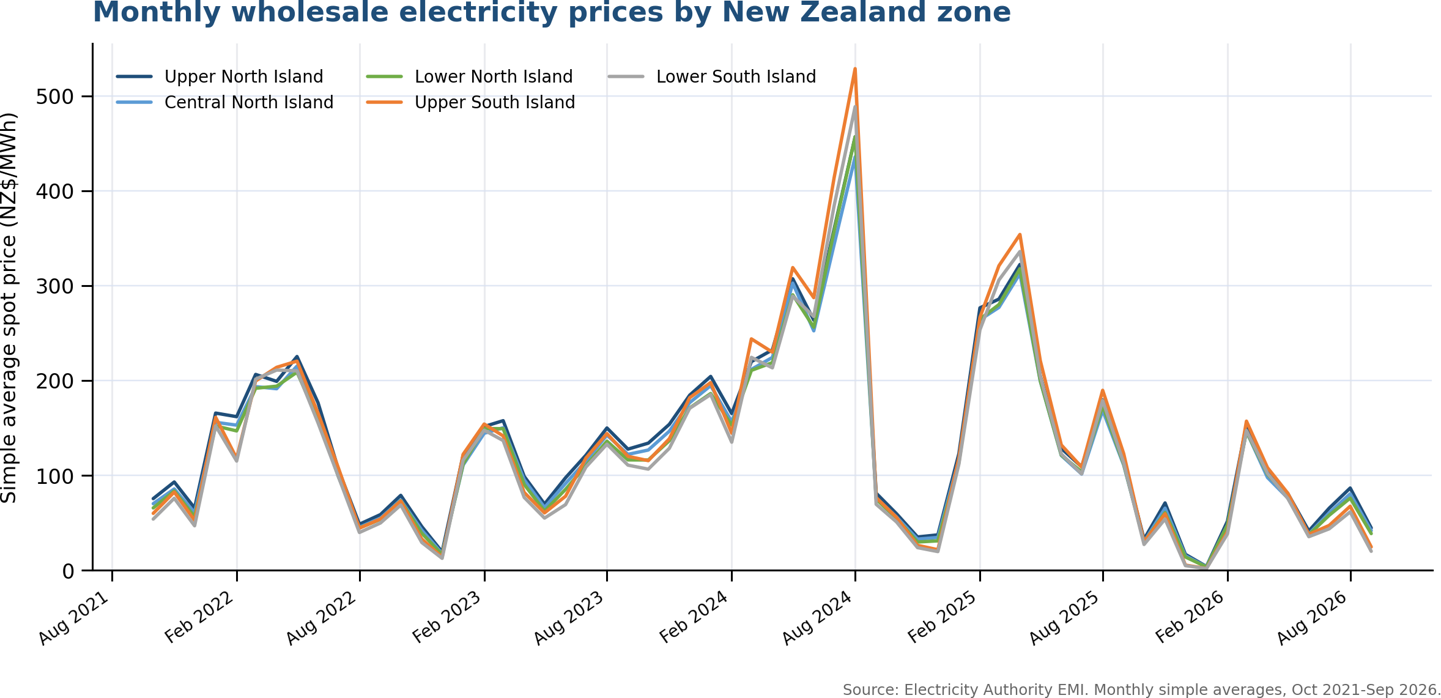
The 2024 price spike highlights New Zealand's exposure to changing generation conditions. Declining hydro storage levels, declining gas availability and increased winter consumption all contributed to the spike. Wholesale prices have now at relatively stable levels as renewable generation, such as solar and wind, have increased,
For schools, the lesson is not to try to predict the wholesale market, but to be ready to act when conditions are favourable. Contract expiry dates, tender timing and the authority to accept an offer can all matter when underlying wholesale prices are moving quickly.
Opportunity to collaborate
Procurement Australia welcomes the opportunity to create a buying group for ISNZ schools. We have created many buying groups to help education organisations increase their buying power and deliver optimal cost outcomes. Contact Stephen Worrall, General Manager - Education, Procurement Australia sworrall@paltd.com.au for further information.