Green School New Zealand will be hosting ISNZ’s inaugural Study Tour in May 2026. We recently caught up with Nigel Barrett, Head of Campus.
How long has Green School New Zealand been active, and why is it based in Taranaki?
Green School New Zealand is now in its sixth year of operation. It is part of a small global network of Green Schools, with campuses in Bali, South Africa, and New Zealand.
The school is based in Taranaki because the region aligns strongly with the school’s purpose and identity. The founders, Michael and Rachel Perrett, have meaningful links to the area, and Taranaki provides a powerful setting for education grounded in sustainability and regeneration. The campus itself is a transformed 60-hectare farm, offering abundant space and authentic opportunities for learning through nature, land-based projects, and community partnership. It is also a region that appeals to families seeking a healthy, outdoors-focused lifestyle, strong community connections, and a place where children can grow up in a safe and enriching environment.
How has the school evolved since its inception?
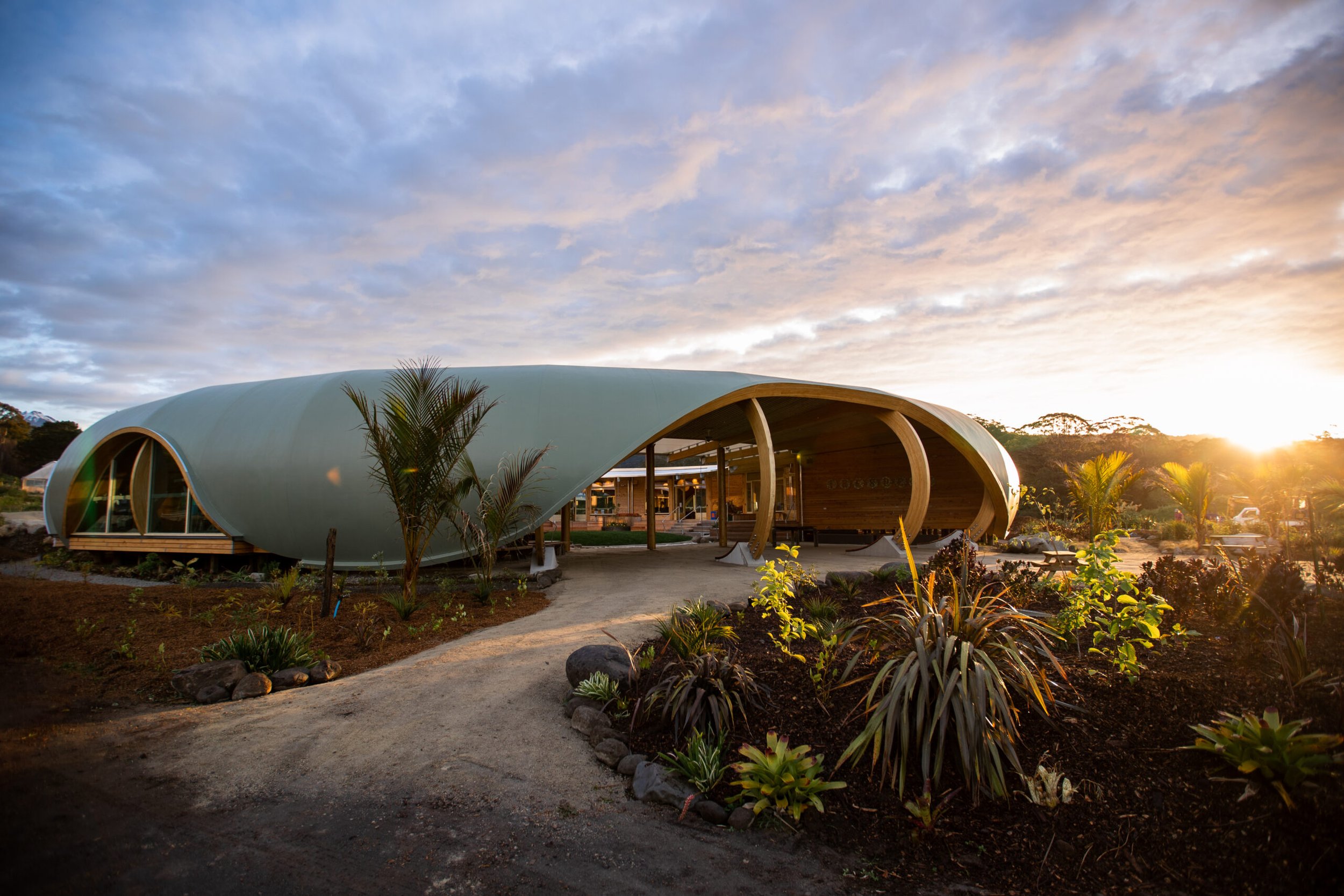
Green School New Zealand has evolved significantly since it began. The school started as a small learning community operating from a farmhouse setting. Since then, it has grown into a highly distinctive, purpose-built campus set across 60 hectares with learning environments designed to support creativity, collaboration, inquiry, and connection to the natural world.
Today, the campus features unique learning spaces and is surrounded by abundant natural areas and native plantings, enabling learning to extend well beyond the classroom. The growth has not only been physical; the school has matured in its systems, learning design, and pathways for students, while remaining true to its founding vision of education that is both future-focused and grounded in place.

What size is the school and what age group do you teach?
Green School New Zealand currently has around 100 students, and learners range in age from 5 to 18 years old. This relatively small size supports a strong sense of community—students are known well, relationships are central, and learners often connect across age groups through shared experiences and projects.
What would we experience on a Green School tour?
A Green School tour feels very different from a traditional school visit. You would experience a campus with a distinctive, eco-inspired aesthetic and learning spaces designed to reflect the school’s philosophy—calm, purposeful environments that blend indoor and outdoor learning. Visitors typically see students learning through hands-on, experiential approaches and engaging with the natural environment as part of daily school life. Alongside classroom-based lessons.
A key highlight is the way student learning becomes visible through projects and capstones that have real impact. Many student initiatives contribute directly to the school’s development or broader sustainability goals—so learning is not simply theoretical, but applied and meaningful. Tours also showcase the diversity of the student body and the strong values-based culture that underpins belonging, wellbeing, and purpose.
Watch video here.
What curriculum does Green School follow, and why?
Green School New Zealand follows a curriculum model designed to combine academic rigour with the school’s distinctive emphasis on purpose-driven, regenerative education. In senior school, Years 12 and 13, students can complete the Green School New Zealand Diploma Advanced, which is designed to be a credible pathway for entry into New Zealand and International universities. The school is accredited by NEASC.
In core learning areas, the school ensures strong structure and progression. For example, the mathematics programme has been developed to provide clear scope and sequence, supporting consistent progress across year levels. English is aligned to New Zealand expectations, with an emphasis on strong academic reading, writing, and communication. In the middle years, students experience nature immersion, interdisciplinary learning, and project-based approaches that are uniquely “Green School,” helping learners connect their education to place, identity, and real-world impact.

Click here to book your space on the Green School - Study Tour, 7 May 2026. There is no cost for this event.